Showing posts with label Focus December. Show all posts

Sunday, January 11

Extended essay - oppurtunity

The subject of my extended essay is an important decision as this is an opportunity to learn and get deeper knowledge about a certain area that is close to my interests as a landscape architect. 

My initial thought was to look into food production / growing in an urban environment, not calling it Urban agriculture - but more interested in smaller scale solutions that can make a big difference.

My other thought is to look into the planting element that is used in urban environments today. In a lot of urban schemes a lot of block / mono cultural planting is used and I wanted to investigate what benefits a more naturalistic solution could have. Also looking at other ecological solutions that can be applied in different spaces to change the way a process works. 

I think it is important that the subject of the essay is a something that will increase my knowledge in area that will benefit me when I start to work in a practice. I think both these subjects are close to heart and is valuable knowledge that I can use in projects. 

Saturday, January 10

Interesting diverse projects

In this post I am looking at some of the most interesting projects done by Landscape Architects over th last years.

The reason why I like these ones are that the are very current and are addressing concerns that are very important today.  I also  looked at the range of different projects that a Landscape Architect may be undertaking - everything from master plans to landscape character assessments, large landscape design projects to food growing projects. I think it is interesting and important to understand that there are a number of different areas you can work in as a landscape architect. 

By looking at different projects and identifying skills needed for the different projects I hope to find out areas where it would benefit me to get better knowledge in.
---------------------------------------------------------------------------------------------------------------------------------------

Landscape character maps for Wales 
Landuse Consultants
Landscape Institute Strategic Landscape Planning Award 2008
Landuse consultants has produced a new map of Wales - based on its changing landscape character. The map describes 48 different landscape areas, but what makes the map unique is that it doesn't just describe the geology, land form and biodiversity. It describes each areas distinctive sense of place. 

The work is on going and the next step is public consultation in spring. 

Not all landscape practices takes on this kind of work, but I think it add another dimension to the design work that a landscape architect does. It is important to understand the bigger picture when designing a space and I would like to have the opportunity to work on projects like these in the future. 
---------------------------------------------------------------------------------------------------------------------------------------


Offshots, Burnley - Permaculture project
Managed by Groundwork Penine Lancashire

Is a permaculture project in Burnley. It is a great example of sustainable food growing - but is also exemplar when it come to community engagement. It is located on a former site of the walled kitchen gardens of Townley Hall. It is managed
 by Groundwork Penine Lancashire - they work principally as an organiser and facilitator. They help to get funding and has provided a master plan which has given a structure to work to and to allow a plan for development. 

The Production gardens are the heart of the project. The produce is part of Burnley food link. There is also other ecological elements on site such as a cob building, community compost scheme, tree nursery, beekeeping initiative, reed beds and a sensory garden. 

Offshoots involves people from the whole community, either through the composting project, as visitors to the site, as volunteers, or through colleges and schools running training courses - Offshoots is for people of all ages, abilities and backgrounds. 

Offshoots was one of the first of schemes like these that are now becoming more usual and popular. I think it is great. It provides a sense of community and is a response to threat of climate change. Some people might not think it is beautiful and does schemes like these need landscape architects involved? I think landscape architects can play an important role in making sure that the space works as best as it can in turns of layout and the the way different spaces work together.  A lot of the methods of processes in the projects - such as reed beds, composting, green roofs. etc is something that we as landscape architects should be experts in and we can also help to bring new ecological and sustainable processes to a project. 

A well designed space should be well used, bring a sense of place and community and I think we can learn a lot from projects like these. 

---------------------------------------------------------------------------------------------------------------------------------------

Daniaoarken, Western Harbour in Malmo
Sweco
The park was created as part of a residential development in the harbour of Malmo Sweden. The park has no spatial boundaries part from the residential blocks at the back edge and is in a wind swept and open landscape. The elements of exposure and openness in the park make a strong contrast to the adjacent city district with its small, narrow alleys and squares. There are a few sheltered spots in the perennial terraces - but part from that you are really open to the elements here. 


The platforms out to the sea are playful and kids love jumping off them in the summer time. There are also tall climbing walls to get back up again. 

I like the simplicity and swedishness of this project. Being from Sweden I have always had a strong connection to the water - because of the many lakes and growing up spending my summers by the sea. I think the material use and openness is great. 


I choose to look at this project cause it uses clean modern  and playful design that work with the natural elements and responds and makes them stronger in the setting. I think that is another way of responding to nature and it brings attention to the sea and the possibilities of water. It brings out  and connects with water without intruding. 
---------------------------------------------------------------------------------------------------------------------------------------

To sum up;
To find out more about what I need to do and what I need to learn to make myself emplyable when I finish univeristy I choose to look at some interesting and different projects in the landscape profession instead of looking at a particular practice. I think by looking at projects that I like and the principles of these projects I can identify what I like to learn more about and methods to try out in mys last projects this year. 

In the play project we are working on at the moment I am interested in trying to combine a sensory hearing garden with play and food production to bring together a community in a playful way.

In the canal restoration project we just finished working on I will add some more management princilpes and really describe the ecolgical processes I use in the scheme. I will also try to describe how this can be used to create a sense of place and character that fits in the existing landscape. 
Sunday, December 21

My Priorities

In my design work I like to work with clean and simple designs that are interactive and playful as well. I like to use as much of natural and ecological processes as possible using a holistic approach. I realise looking back at my projects through my previous years that I also incorporate contrasting elements in most of my designs. Since my first year sustainability and ecology has had a strong presence in my work. I think the challenge can sometimes be combining these priorities with an end result that is contemporary and innovative. 


Proposal for community allotments on a back street in Waterloo.

In the last project in my second year I designed a Street scheme incorporating suds and water collecting structures and community allotments. There is a lot of talk at the moment about the housing estates and their landscapes (it was the subject of the Landscape Institute conference in November - see previous posts).  I think a good safe surrounding street will help and community allotments would transform spaces that mostly consists of short mown grass into a productive and beautiful space. 

This year when working on a canal restoration project I struggled at first to justify the restoration of something man made. After researching and looking into the subject more I realised it was a challenge to work on schemes that you might not like the look at at first. Through research I came up with the solution of growing short rotation willow coppice along the restored canal - then canal could then be utilised to transport the wood chips from the willow and machinery and staff could be shared between farmers. The willow coppice also act as a filter of the runoff from the agricultural nitrogen water and cleans it before entering the canal. 

Image showing the cycle of Short Rotation Willow Coppice.

I think this project shows that you can make a productive landscape interesting and beautiful - at the same time as being multifunctional. I like designing landscapes that use natural processes whilst responding to climate change. 

In the next project we will be given the opportunity to work with the public and other partners. This is something I am very interested in and am looking forward to. I think sometimes too many designs are thought up in the office and in the future I would like to have the opportunity to work with people and practices that work with the public and also design schemes for management of spaces and just not the space. As this is something that is very important.

I like the idea of working for a local authority or government organisation - I know that the get good and interesting projects to work on. I wrote my management report on Sutcliffe park which was designed by landscape architects working for the environment agency. 

In terms of practices I am a big fan of Latz and Partner in Germany - in the UK my favourite practice is Land Use Consultants. I would love to have the opportunity to work for a practice that has other departments as welll as landscape architects - such as ecologists. As this is something I am interested in learning more about. 

Eden Project

Saturday, December 20

Photography

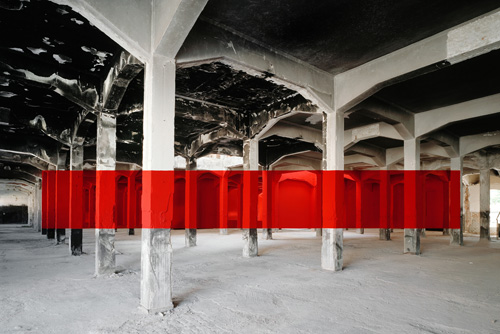
Went to a lecture held by the head of photography at Kingston, Vince Wade to inspire us to be more playful with our photography. The advice was to challenge the 'of' of a photo - to consider what you are capturing in the rectangle. To make your photos visually interesting and to represent the world in way that it really exists. To take photos in a non perspective way as well - to convey and provoke more feelings in your photos. We were introduced to some very cool photographers. My favourites were Georges Rousse and Stephen Gill.


Georges Rousses says that he likes the empty canvas and that it inspires him. His art is supposed to be viewed from certain viewpoints to achieve the wanted affect. He always photographs his art as well. I think his photos and art are playful, simple and great. It makes you look twice or more!


Stephen Gill is a photographer who has learnt to haunt the places that haunt him (quote from his website). In his collection Hackney flowers he collected flowers, berries and seeds from around hackney and then pressed and layered photos from hackney and took photographs from. The photos are beautiful and the the feeling he gets from doing his work this way is very different from what you can do in photoshop. His work is holistic and beautiful!

Tuesday, December 16

Kew Gardens

Compost and Waste Management

I have been to Kew several times – but this time I was given the chance to see a bit of the behind the scene of the running and management. As part of our theoretical module on the course we met David Barnes, the Manager of Horticultural Support at Kew.

Kew Garden has a responsibility to protect and take care of its collections of plants and seeds. With this comes a responsibility to its surroundings and setting as well. Kew is located on flat, dry and free draining gravely and sandy soil. The soil gets very dry in the summer – with nutrients draining away. Kew is also located on the Heathrow fly path and the emissions and pollution also affects the garden and its species.

Irrigation is a must for Kew. The irrigation system has recently been updated.  The water comes from the mains and fills up a 70 000 litre storage tank – from there it leads to water ring circulating the whole site and from there feeding directly to the plants. This reduces the leaks and makes it easier to control which areas you water. 

Rainwater is collected from the main buildings and fills up tanks. The rainwater collecting system is not as developed as they would like – but is something they are looking on improving for the future.

The composting system is well developed at Kew. All the plant material from the maintenance on site is broken down to compost on site. It is all a natural and organic process with only stable manoeuvre added to the other ingredients of water and CO2.  The manoeuvre comes from the stables at St John’s Wood.

The compost yard has been there for 10 years and is built on concrete with a moat surrounding and collecting the runoff water from the compost heaps. This is to protect the Thames from runoff water which has very high levels of nutrients. The runoff water is instead collected and lead into a tank where it is filtered and then used to water the compost heaps. 

The materials are sorted on the yard by heaps of: herbaceous, manoeuvre and woody materials.  The woody materials are shredded and screened. Whilst the herbaceous materials only need shredding.  The wood chips are mixed 4:1 with the manoeuvre. Water is added and the heap is turned once to further speed up the process. It takes about 8 weeks before it is ready to go back out in the gardens to be used as surface mulch.

Close up look at the wood chips mixed with manoeuvre and to the right the wood chips are completely broken down into surface mulch.

The herbaceous materials are mixed on a 1:1 with manoeuvre. No water is added to this process as the herbaceous materials already have a high level of water.  The compost is ready after 6 weeks and is used as soil conditioner which is dug down to mix with the soil on a deeper level.


Herbaceous material starting to break down into compost.

The gardens are saving half million pounds every year by producing their own compost and it is obviously the most sustainable alternative as well.

An interesting fact about the compost heaps are the high levels of energy that they generate.  David Barnes mentioned that pipes could be lead underneath the heaps to help with possible water heating for an example. This is something I am surprised that Kew has not investigated further yet.

The talk also reached a point of discussion the waste generated by the public and if this is recycled. At the moment there is no recycling in place for this. David Barnes said that most of the waste from the public is high level of low weight plastics. Which is costly and complicated to recycle and there is issues with storing that amount of waste on site. But he said that he would like to put some systems in place.

I think the clue for this may lay in the management of the visitors. Waste is something that is hard to control – cause even if the food and products sold on site are being controlled  and more sustainable – you can’t keep people from bringing in their own food and waste to the site. 

The issue of carbon footprint was also discussed and I think that David Barnes answered the questions very well. He said how do measure the carbon footprint for a site for Kew. There is obviously the energy the site uses and the carbon that it emits. There is also certain inherited carbon in the buildings and also all the people visiting Kew.

The later can be put done to trying to manage your visitors and the way you can encourage them to think about the way the travel to the site for an example. Like the Eden Project gives discounts to everyone that arrives by cycle or foot.  This could be tried at Kew by maybe give discounts to everyone that produce a travel card or people showing that they live locally and can show that they walked to the site.

The visit was interesting and it was good to see the composting process which is surprisingly simple and organic. I think I site like Kew still has a long way to go in sustainable management processes – but by listening to David Barnes you realise that the interest is there and it comes downs to costs and procedures.